
Poetry in Pain: A ‘Hamnet’ Film Review
by William Lindus
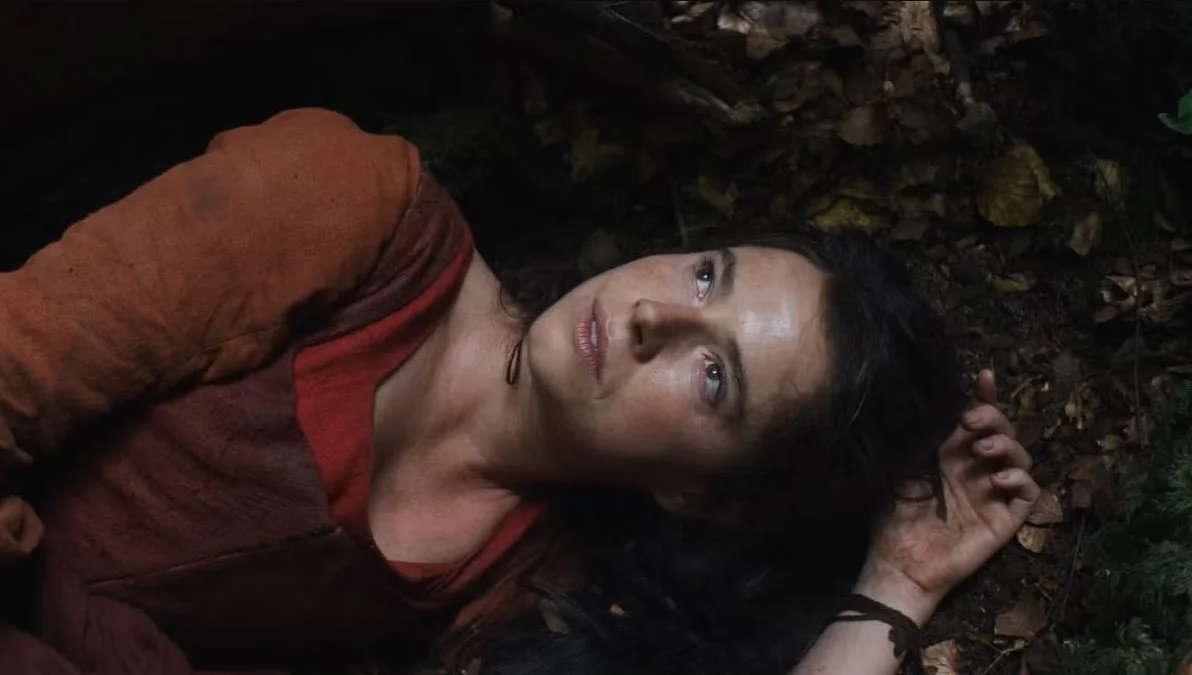
Chloé Zhao’s Hamnet, adapted from Maggie O’Farrell’s celebrated 2020 novel, is a film of quiet magnitude—one whose emotional resonance sneaks up on you not through sweeping declarations, but through the thoughtful, meticulous construction of its themes. Co-written by Zhao and O’Farrell and anchored by luminous performances from Jessie Buckley and Paul Mescal, Hamnet transforms a story rooted in unimaginable loss into a portrait of marriage, artistry, and the different ways human beings navigate the fractures that grief leaves behind.
At its core, Hamnet is a film about the messy, ungovernable shape of mourning—how one family attempts to survive the death of their 11-year-old son. Zhao treats grief not as a dramatic spike but as an evolving terrain. Some characters confront it directly, naming their pain as though speaking it aloud might restore order. Others retreat inward, translating what they cannot articulate into forms of art and ritual. The film’s most profound insight lies in the uneasy coexistence of these responses: the notion that true healing often emerges not through one path or the other, but in the tender, fragile space where they intersect.
This is embodied, with astonishing clarity, in Jessie Buckley’s performance as Agnes. “Powerful” is too small a word for what she does here; rather, her work is precision-crafted in its power, built from an acute understanding of how emotional truth often lives in silences and micro-movements. Buckley has long been an actor capable of volcanic intensity, but what stands out most in Hamnet is how she imbues stillness with meaning. A glance can speak to years of marital strain; a tightened jaw can trace the line between sorrow and surrender. Even in the film’s largest emotional crescendos—scenes Zhao allows to unfold without sentimentality—Buckley maintains a sincerity that feels almost disarmingly human. It would be surprising if her name were not in serious contention for a Best Actress nomination.
Opposite her, Paul Mescal offers a nuanced portrait of William Shakespeare—not the cultural monument, but the husband, the father, and the artist grappling with the inadequacy of language at the very moment he most needs its comfort. Mescal’s restraint beautifully complements Buckley’s rawness; together they form a study of two people who grieve at different frequencies, sometimes harmonizing and sometimes drifting painfully out of sync.
The film’s title character, young Hamnet, is played with remarkable sensitivity by Jacobi Jupe. So often child performances in historical dramas fall into the trap of precociousness, but Jupe sidesteps this entirely. His work feels grounded, lived-in, attuned to the emotional weight of the material. Whether delivering lines imbued with gentle humor or confronting scenes shaded by fear and fragility, Jupe strikes exactly the right balance. His presence becomes essential not just to our affection for the character, but to our understanding of the magnitude of the loss that reverberates through the film. In one of Zhao’s most inspired choices, Jupe’s older brother Noah Jupe appears briefly as a stage incarnation of Hamlet—a meta-cinematic echo that enriches the film’s meditation on how grief shapes—and is shaped by—art.
Music plays a crucial role in sustaining the film’s delicate emotional architecture, and Max Richter’s original score is a triumph of restraint. Rather than leaning into melodrama, Richter composes with a kind of elegant modesty. Elizabethan textures mingle with contemporary tonalities, producing a soundscape that feels simultaneously grounded in the world of the film and alive with modern emotional sensibilities. The score never overwhelms the narrative; it shadows it, nudging forward the themes of familial love, nature, and the ache of loss. When power is required, Richter supplies it, but always with intention.
Perhaps Zhao’s greatest accomplishment is her refusal to let Hamnet become a self-satisfied literary origin story. A lesser filmmaker might have succumbed to the temptation to pepper the film with winking references, dutifully reminding us of Shakespeare’s future brilliance. Zhao avoids this pitfall with admirable discipline. Yes, nods to Romeo and Juliet, Macbeth, and most significantly Hamlet are present, but they function as atmospheric texture rather than narrative crutches. The film never feels like an exercise in trivia. Instead, Zhao focuses on the emotional realities that could have birthed such work—allowing artistry to emerge organically from personal devastation rather than from mythmaking.
In the end, Hamnet succeeds because it understands that grief is not a plot point but a continuous state of becoming. Zhao has crafted a film that feels both intimate and expansive, a meditation on love, loss, and creative transformation that lingers long after the credits roll. It is a deeply humane work—quiet, textured, and ultimately hopeful—and one of the most affecting films of the year.

5 out of 5 Bear Paws