
‘Michael’ Film Review
by William Lindus
I’m increasingly convinced that Walk Hard: The Dewey Cox Story did irreversible damage to the traditional musical biopic - at least for me. Its pitch-perfect satire opens with Dewey Cox moments before a big performance, only to flash back and retrace every step that led him there. It’s a direct jab at one of the genre’s most overused narrative devices, and it lands so effectively that any film using that same structure now feels less like homage and more like creative inertia.
Which brings us to Michael, a sweeping musical biopic chronicling Michael Jackson from his early days with the The Jackson 5 through the release of his Bad era. The film opens backstage at the height of his fame - Michael poised for performance, a fraught conversation with his father, Joseph Jackson, lingering in his mind - before, inevitably, rewinding to chart the defining beats of his rise.
That structural familiarity is only the surface-level issue. The deeper problem is that Michael plays less like a cohesive narrative and more like a curated playlist of greatest hits - cinematic shorthand for moments you already know. We move from “I Want You Back” to “ABC”, from “Don’t Stop ’Til You Get Enough” to “Billie Jean”, and onward to “Thriller” and “Bad”, but the connective tissue between these milestones is thin. The film gestures toward a central conflict - Michael’s struggle to assert independence from his father - but it rarely interrogates that tension in a meaningful way. Instead, it checks the box and moves on.
As a result, the film lacks thematic depth. There’s little attempt to explore the psychological cost of fame, the artistic evolution behind albums like Thriller, or the internal contradictions of a man who could command the world’s attention with “Beat It” yet remain intensely private. Nothing here feels revelatory; nothing reframes what we think we know. It’s all surface, no subtext.
More concerning is the film’s reluctance to engage with the more controversial aspects of Jackson’s life. With the Jackson family serving as producers, the narrative feels carefully managed - edges softened, complexities avoided. The result is a film that feels glossy to the point of sterility. For an artist whose legacy is as complicated as it is monumental, this approach renders the story oddly inert. It’s difficult to fully appreciate the power of songs like “Beat It” - which the film portrays as a force capable of uniting even rival gang members - when the film itself refuses to unite the artist with the life he led.
The closing credits include a teaser suggesting that Michael’s story will continue in a sequel. No, this isn’t some unexpected pivot into blockbuster territory - Michael Jackson won’t be joining Avengers: Doomsday anytime soon - but the implication is clear: there’s more to come. The question is whether there’s more worth telling if the filmmakers remain unwilling to confront the full scope of his life. Without that, any continuation risks feeling like an encore no one asked for.
To be fair, the film is not without merit. Director Antoine Fuqua demonstrates a strong hand in individual sequences. Isolated moments - whether triumphs on stage or clashes behind closed doors - carry genuine emotional weight. The cinematography is competent, occasionally evocative, and always in service of the performance, even if it rarely pushes beyond convention.
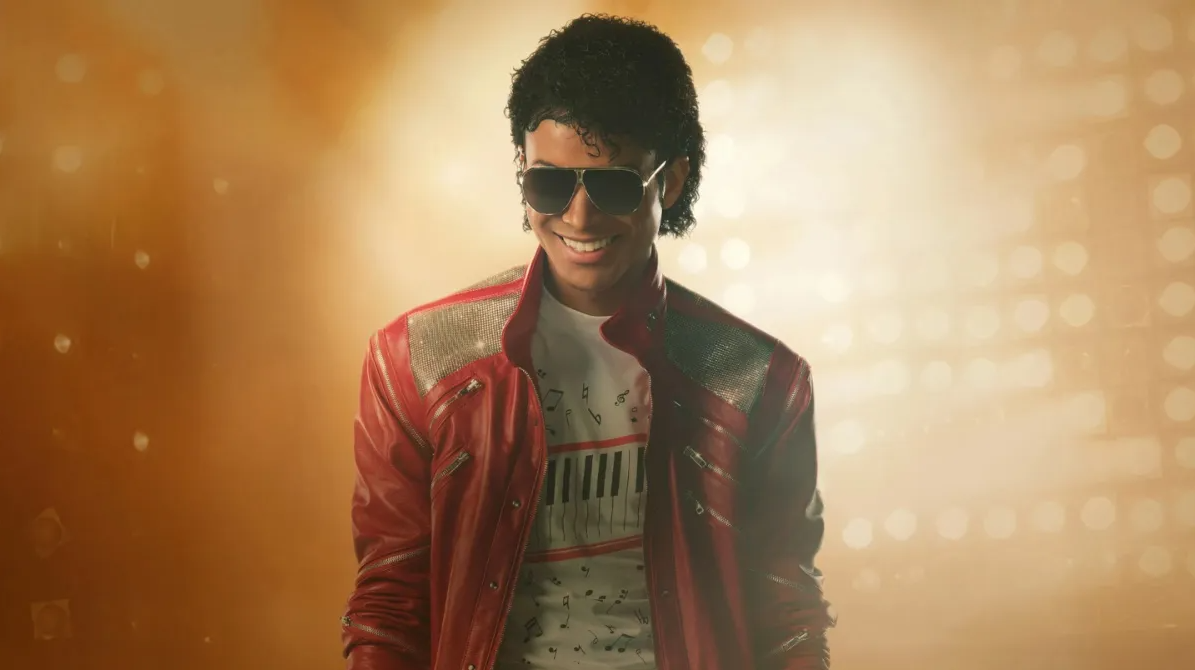
The standout, unsurprisingly, is Jaafar Jackson (real life son of Jermaine Jackson) as Michael. His performance is more than imitation; it captures the physicality, vocal cadence, and quiet intensity that defined Jackson’s presence. His scenes opposite Colman Domingo as Joseph Jackson are among the film’s strongest, even if they occasionally overstay their welcome. There’s a palpable tension there - echoes of the control and pressure that shaped Michael’s early years. KeiLyn Durrel Jones also brings warmth and grounding as bodyguard Bill Bray, serving as a rare emotional anchor in a film that often feels unmoored.
Less successful are a pair of high-profile supporting performances. Miles Teller and Mike Myers appear in roles that, while not outright stunt casting, are distracting enough to break immersion. In my screening, their entrances were met with unintended laughter - not because the film earned it, but because their presence felt tonally out of sync with everything around them.
Ultimately, Michael will likely satisfy devoted fans. There’s a certain pleasure in recognizing iconic moments - the first moonwalk, the unmistakable opening bassline of “Billie Jean”, the spectacle of “Thriller”. For some, that recognition will be enough.
But it shouldn’t be. Biopics have the potential to do more than recreate - they can reinterpret, challenge, and illuminate. They can take risks with structure, lean into stylistic boldness, and offer new ways of understanding artists we think we already know. This film gestures in that direction but never commits.
I wanted to be thrilled - capital “T,” with a Vincent Price laugh echoing in the background. Instead, I found myself asking a far simpler question: is this Bad?

2.5 out of 5 Bear Paws