
Welcome Home: ‘The Housemaid’ Film Review
by William Lindus
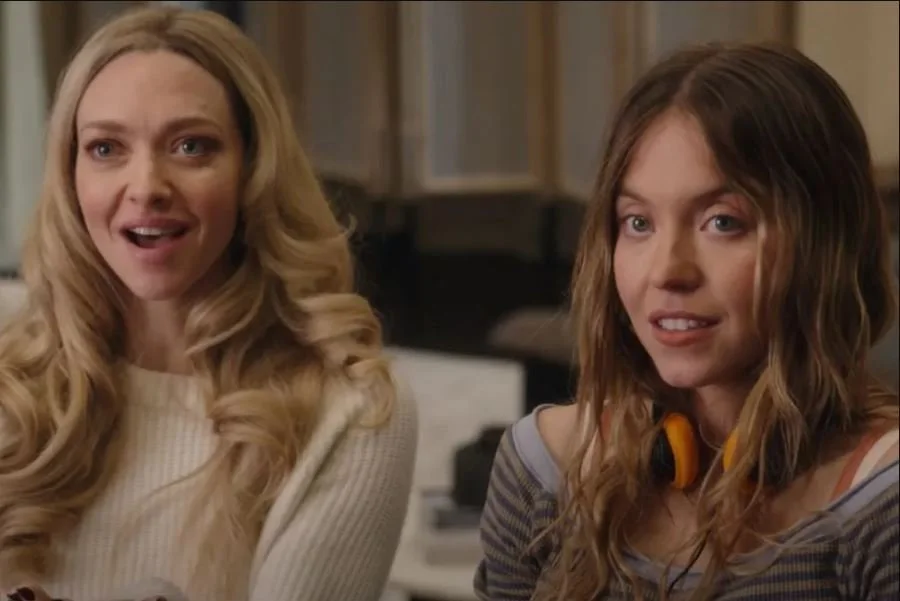
Millie (Sydney Sweeney) has not been dealt an easy hand. Circumstances from her past—kept deliberately opaque—have left her living out of her car, scrambling for stability and dignity wherever she can find it. Salvation appears to arrive in the form of an interview with a wealthy family seeking a live-in housemaid. Nina (Amanda Seyfried), the elegant and enigmatic matriarch, seems instantly charmed by Millie, offering her the job with an ease that feels almost providential. For someone with nothing left to lose, the opportunity looks like a lifeline.
That illusion does not last long. Once settled into the pristine home, Millie begins to sense that something is deeply wrong beneath its polished surfaces. Nina’s warmth curdles into volatility, her moods swinging sharply and without warning, her verbal attacks landing over the smallest perceived slights. The household’s young daughter, Cecilia (Indiana Elle), remains distant and unreadable, offering no comfort or companionship. The only apparent ally is Andrew (Brandon Sklenar), the impeccably groomed technology mogul whose charm and perfect teeth project reassurance and control. Yet in a house where nothing feels accidental, even kindness carries a question mark.
If this premise calls to mind a glossy soap opera or a heightened Lifetime thriller, that instinct is entirely correct—and intentionally so. The Housemaid is adapted from the wildly popular mystery thriller by Freida McFadden, who adapts her own novel for the screen. Paul Feig directs, building on the tonal blueprint he established with A Simple Favor and Another Simple Favor. Here, he leans into pulp with confidence and precision, crafting a film that revels in excess, misdirection, and escalation. The Housemaid is unabashedly twisty, delivering revelations that are progressively juicier and more outrageous, yet carefully calibrated to keep the audience leaning forward rather than rolling their eyes.
Tonally, the film recalls something like Gone Girl, but stripped of its chillier nihilism and allowed to luxuriate in wealth, artifice, and melodrama. This is a thriller that enjoys its own extravagance, using opulence not just as set dressing but as an active ingredient in its suspense. Feig understands that the pleasure here lies not in restraint, but in the slow tightening of narrative screws until everything snaps into place.
At the center of it all are Sydney Sweeney and Amanda Seyfried, both of whom deliver performances that fully commit to the film’s heightened register. Their relationship—equal parts psychological chess match and emotional tug-of-war—becomes more charged with every scene they share. Each actress understands exactly what the film requires and plays accordingly, pushing their characters into sharper definition as the story unfolds. When the film shifts gears later on, both rise effortlessly to the challenge, sustaining momentum rather than losing it.
Reviewing The Housemaid in detail is tricky, as the film is built around a classic mystery-box structure that guards its deeper thematic concerns closely. On its surface, the film gestures toward familiar ideas about wealth—specifically, the notion that money and comfort do not guarantee safety, happiness, or moral clarity. There is a clear “be careful what you wish for” undercurrent at play. Beyond that, the film has more on its mind, but discussing those layers risks spoiling pleasures best discovered firsthand.
What can be said safely is this: The Housemaid is a sharp, entertaining thriller that allows its stars—and its director—to flex in ways that feel both confident and revitalizing. It is a film best experienced unspoiled, with blinders firmly in place, and one that delivers on the promise of its premise with style and conviction. Highly recommended.

4 out of 5 Bear Paws